

Every educator wants students to have fun while learning. The challenge is remembering that having fun may not be the same thing as learning. It is possible for students to leave a fun lesson saying, “That was awesome!” while remembering almost nothing the next day. True engagement goes much deeper than entertainment. When students are engaged, they think, question, explore, and connect ideas in meaningful ways. The good news is you do not need a classroom full of flashy gadgets or a Broadway-worthy performance to make that happen. Sometimes the best learning happens when students are so busy discovering something new that they forget they are learning at all.
Entertainment Gets Attention While Engagement Builds Learning
There is nothing wrong with making learning enjoyable! In fact, students are much more likely to participate when lessons are interesting and interactive. The problem comes when the focus shifts from learning to simply keeping students occupied. If every lesson depends on constant excitement, students may come to expect to be entertained rather than challenged.
Engagement happens when students have a reason to think. They ask questions, solve problems, work together, make predictions, and apply what they already know. They become active participants instead of passive observers. Think about the difference between watching someone perform a science experiment and actually making predictions before conducting it yourself. One might be fun to watch. The other creates lasting learning.
The best classrooms find the balance. Students laugh, move, explore, and have fun while still developing critical thinking skills that stay with them long after the lesson ends.
Why Engagement Leads to Better Learning
Engaged students retain information longer because they are actively involved in the learning process. Instead of memorizing facts for tomorrow’s quiz, they build connections that help them understand concepts on a deeper level. Research consistently shows that active participation improves comprehension, problem-solving, and long-term retention.
Engagement also creates classrooms where curiosity becomes contagious. Students who are asking questions are actually learning how to think instead of simply learning what to think. They become more willing to take risks, collaborate with classmates, and persevere through challenges. Those are skills that extend far beyond the classroom.
Of course, no teacher can compete with video games, social media, or the latest viral videos. Thankfully, that is not the goal, and no one is expecting you to do that. Education is not about winning the entertainment contest. It is about creating meaningful experiences that students remember because they participated, not because they watched.
Five Ways to Turn Entertainment Into Engagement
-
-
Ask more questions than you answer. Instead of immediately giving students the correct answer, encourage them to predict, discuss, and explain their thinking. A little productive struggle often leads to much deeper understanding.
-
Give students something to do, not just something to watch. Whether it is building, experimenting, sorting, debating, or solving a mystery, hands-on experiences naturally increase participation and ownership of learning.
-
Connect lessons to real life. Students are much more invested when they understand why something matters. Show them how today’s lesson connects to careers, everyday life, or the world around them.
-
Give students meaningful choices. Not every student learns in exactly the same way. Offering choices in how students complete an assignment, demonstrate understanding, or participate in an activity increases ownership and motivation.
-
Make time for reflection. The lesson should not end when students put away their pencils. Encourage students to reflect on what they learned, what challenged them, and how their thinking changed. Reflection helps students make connections, recognize their own growth, and develop the habits of lifelong learners. It also gives teachers valuable insight into what students truly understand.
-
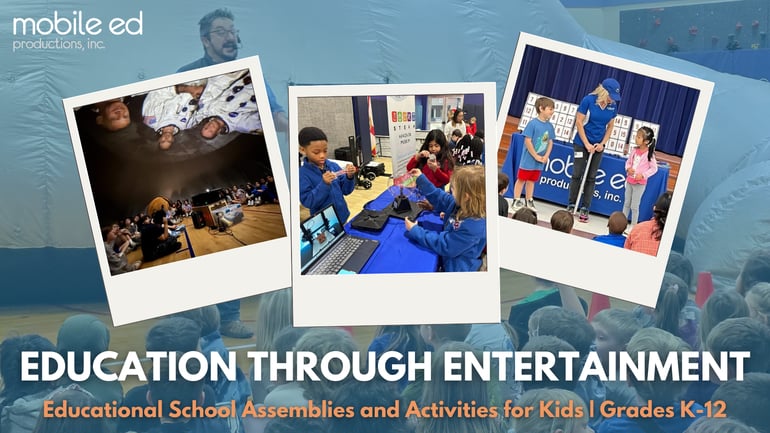
How Mobile Ed Turns Entertainment Into Education
One reason Mobile Ed programs are so successful is this: as entertaining as our assemblies may be, true student engagement is our main purpose. Our presenters know how to capture students’ attention, and every activity has a purpose aligned with real learning objectives. Students participate in interactive experiences, ask questions, make discoveries, and connect classroom concepts to the real world. With programs ranging from Earth and space exploration to hands-on science, engineering, and kindness, Mobile Ed offers a variety of ways to bring learning to life. No matter the topic, the goal is the same: to make learning active, meaningful, and a little more exciting than a worksheet.
Ready to Bring Engagement to Your School?
Click the button below to contact our team and learn more about our educational programs and what's available in your area.