Winter brings chilly mornings, early sunsets, and the irresistible urge to wrap up in a blanket and look up at the sky. The colder months also offer some of the clearest stargazing opportunities of the year. But, let’s be honest for a moment. As much as we love the idea of a winter nature walk, the reality often involves a lot of shivering, chattering teeth, and students more focused on their frozen fingers than the wonders of the natural world.
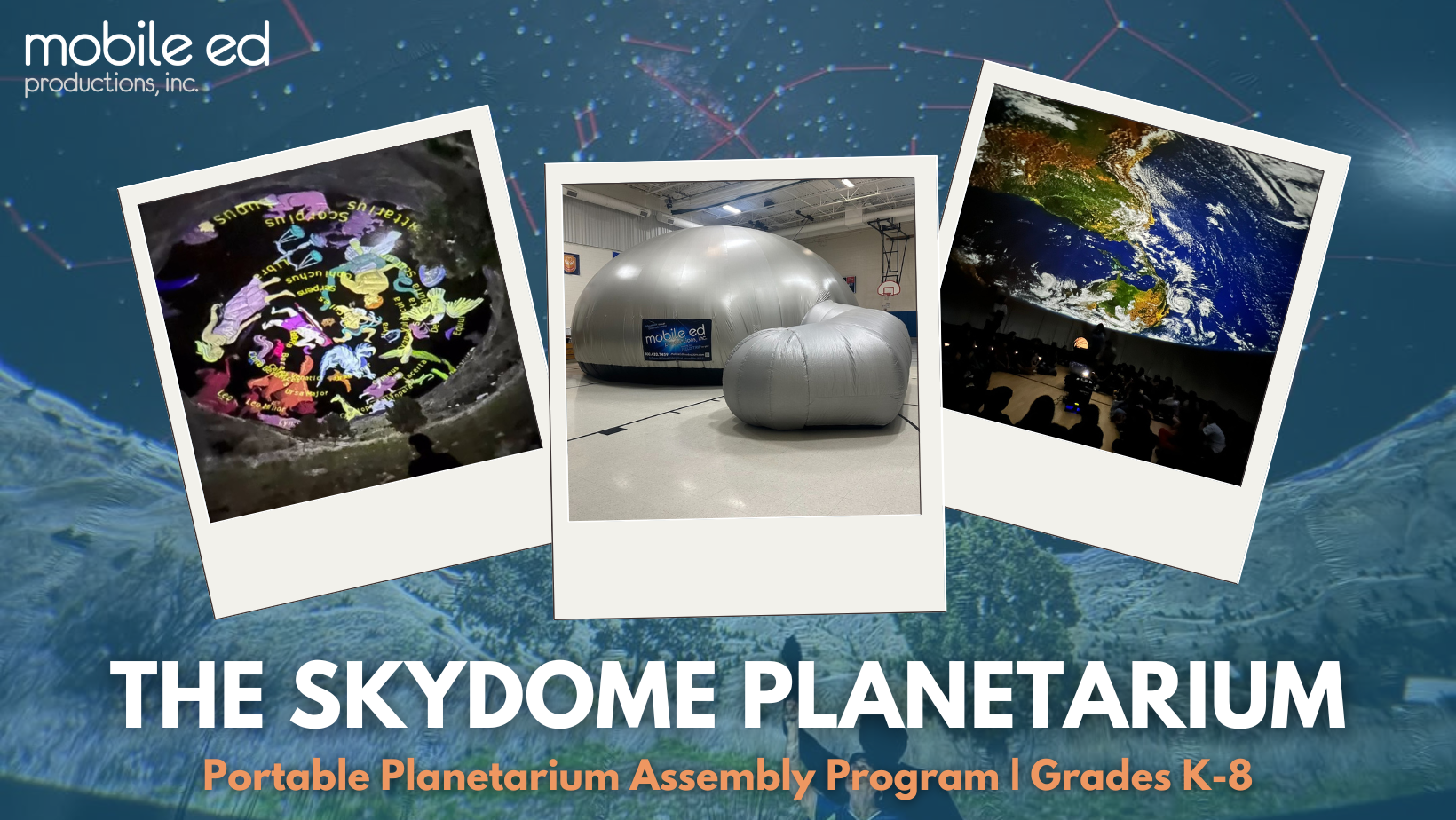
At Mobile Ed, we believe you shouldn’t have to choose between frostbite and a quality science education! Winter astronomy is magical, and we want students to know that space science is not just for astronauts and sci-fi fans. It is for everyone with a sense of curiosity. Our SkyDome Planetarium transforms your average school gym into a 360-degree universe filled with stars, constellations, planets, stories, and wonders. It is winter stargazing in perfect climate-controlled comfort, and it brings science education to life in unforgettable ways.
Why the Winter Sky is Special
If you have ever looked up on a crisp December or January night, you might have noticed that the stars seem brighter and sharper than they do in July. You aren’t imagining things! There is actually a scientific reason for this dazzle.
According to astronomers at EarthSky, the winter sky appears clearer largely because cold air holds less moisture than warm summer air. Summer nights are often hazy due to humidity, which blurs our view of the heavens. In winter, that haze disappears, leaving a crystal-clear window to the universe above our heads.
Winter skies showcase some of the most spectacular celestial sights. The Orion constellation dominates the southeastern sky and planets like Jupiter and Venus often shine brighter than the holiday lights across town.
Furthermore, our perspective changes. In the summer, Earth faces toward the center of our Milky Way galaxy, which is packed with billions of stars and thick dust clouds. It makes for a beautiful, hazy band of light, but it can obscure individual stars. In the winter, we look away from the galactic center, toward the outer spiral arm of the galaxy (the Orion Arm). This means we are looking into deep space with less “clutter” in the way, making the bright stars of our local neighborhood pop with incredible intensity.
The Challenge of “Field Trip” Astronomy
While the science is fascinating, the logistics of a winter stargazing field trip are, well…nothing less than…complicated. First, you have the weather. Second, you have the timing; asking parents to bring students back to school at 8:00 PM is a tall order. Most astronomy units are taught during the school day, under the fluorescent lights of a classroom. Textbooks and flat images on a smartboard can be helpful, but they lack the awe-inspiring scale of the real thing. It is hard to grasp the magnitude of a star like our Sun when it is just a picture on a piece of paper.
This is where our team comes in. If you can’t take your students to the stars, we bring the stars to your students!
Mobile Ed’s SkyDome Planetarium is one of our most popular assemblies because it solves the “daytime astronomy” problem perfectly. We travel to your school with a massive, inflatable planetarium dome. It is large enough to fit 90 students but designed to set up quickly in your gymnasium or cafeteria.
Inside the SkyDome, students experience:
- A Tour of the Solar System: We zoom in on planets, moons, and the sun, giving students a view through impeccable photography they could never get from a backyard telescope.
- Greek Mythology: We connect the dots of the constellations and tell the ancient stories of Orion, the Great Bear, and others, blending science with history and literature.
- Real-Time Stargazing: Our presenters can show students exactly what the sky will look like over their very own hometown that same night.
- Daytime Accessibility: We turn “nighttime” on and off at will, meaning you can have a full stargazing session at 10:00 AM on a Tuesday.
Ready to Launch?
Don’t let the cold weather freeze your students’ curiosity. By bringing the SkyDome Planetarium to your school, you provide a warm, safe, and immersive environment where imaginations can soar this winter. It’s not just a fun light show; it’s a field trip without the hassle and a rigorous educational experience tailored to K-8 curriculum standards.
Would you like to learn more about availability in your area? Click the button below to start your space exploration journey.