
Storytelling isn't just an English class exercise; it is how students (and adults!) make sense of the world, build confidence, and connect with each other. We remember stories far better than isolated facts because they give context and emotion. They last longer because they are more meaningful. In the classroom, storytelling works across every single subject. Continue reading to learn how you can inspire more storytelling in your classroom.
Why Stories Stick (and Work)
Long before textbooks, people passed down history, lessons, and values through oral stories told time and again. The modern medium of text and type might look a little different today, but the human brain has remained largely unchanged. We are still using storytelling today in our text messages, social media posts, news articles, and in our classrooms too. Why? Because we remember information that is more meaningful to us.
We see stories in all school subjects, not just English class. In science, you can tell the story behind a messy, accidental discovery. In history, you can step away from memorizing dates and talk about what a specific moment actually felt like to live through. In writing, you can give kids permission to build their own worlds entirely from scratch. When you frame learning as a narrative, students stop asking why they need to know something and start asking, with greater anticipation, “What happens next?”
Beyond improving basic writing mechanics, storytelling builds crucial real-life skills. It pushes students to practice critical thinking as they ask questions, develop empathy as they walk in others' shoes, sharpen their communication as they organize their thoughts, and instill real confidence as they take a random thought and turn it into a finished project.
6 Simple Ways to Inspire Student Storytellers
Here are simple ways you can teach and practice the skill of storytelling with your students, no matter what grade they are in.
1. Teach Them to Look Everywhere for Ideas
Great stories come from personal memories, weird science facts, history reimagined, or even an absurdly hypothetical thought that crossed their minds at lunch. Remind your students that no source material is off-limits when it comes to finding inspiration.
2. Use "What If?" Questions to Break the Ice
Playful prompts like asking what would happen if animals ran the school for a day or if someone discovered a secret door under their desk help bypass a student's inner critic and get the ink moving quickly, along with an increase in the creative “juices.”
3. Give Them Choices
When kids get to pick their own settings, characters, or formats, whether that means a comic strip, a script, or classic prose, they will often take instant ownership of their work.
4. Normalize Messy First Drafts
Take the pressure off perfection. Encourage students to focus on getting their ideas on paper first, knowing that strong writing comes from revising, not getting it perfect the first time. Give them a chance to refine what they didn’t like the first time and resubmit.
5. Give Them a Real Audience
Writing purely for a grade feels like work, but writing for peers, parents, or even younger students feels like a mission. Knowing that someone will actually read or hear their work changes their whole approach.
6. Celebrate Every Unique Voice
No two student stories should sound alike. Make a point to celebrate the goofy stories, the dramatic ones, and the shorter ones with equal enthusiasm. Find something unique about each creation.
Bring Storytelling to Life with Young Authors' Day
If you want a hands-on way to teach and encourage creative writing in your school, Mobile Ed’s Young Authors Day is the perfect way to do so.
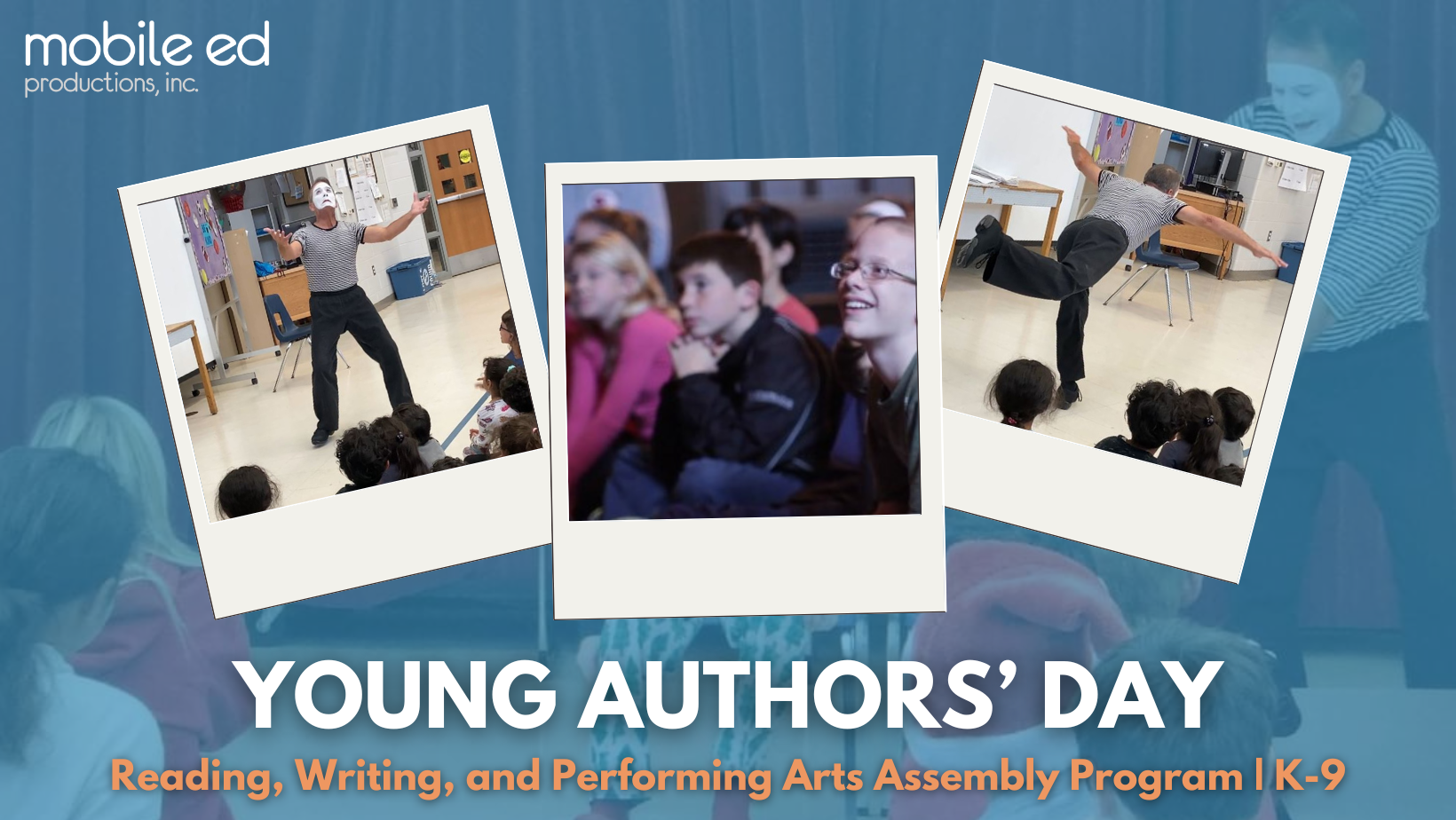
The day begins with an all-school assembly where a classically-trained mime teaches the essentials of storytelling and story structure. Students then head back to their classrooms to write their own original pieces, with the performer dropping by to answer questions and offer guidance along the way. The day ends with a final assembly where selected student stories are acted out live in front of the entire school.
YAD is a unique, hands-on experience that helps students catch a creative spark, build confidence in their writing, and see their imagination come to life. Contact our team using the form below to learn more about bringing Young Authors Day.